


Top Six Pallet Shipping Tips Every Small Business Should Know
febrero 27, 2026

When your business grows beyond small parcels, pallet shipping is usually the next step. Maybe it’s a bulk order, new equipment, or a product that simply won’t fit in a box. Whatever the reason, shipping freight on pallets is one of the most reliable and cost-effective ways to move larger shipments.
Choosing the right shipping pallet plays an important role in protecting your freight, controlling transportation costs, and maximizing trailer space. The ideal pallet depends on your product’s dimensions, weight, shipping method, and warehouse setup. Here are the top six tips to help you choose, prep, and ship pallets with confidence—and to get the most accurate quote possible through Freightquote’s easy online platform.
1. Choose the right pallet and build around your product
Everything starts with the pallet itself. The type and size you choose should support your product safely and securely. A weak, damaged, or mismatched pallet can tip, break, or even be refused by the carrier.
Common pallet types include:
- Wood pallets: strong and cost-effective
- Plastic pallets: lightweight and moisture resistant
- Pressboard pallets: best for lighter loads
And remember: don’t force your freight onto a “standard” pallet just because it’s common. Start with your product’s dimensions first, then choose a pallet that fully supports it. A solid foundation makes everything else easier.
2. Know your pallet size before you ship
Pallet size has a bigger impact than most new shippers realize. The most common standard pallet size in the U.S. is 48” x 40”, but there are several pallet dimensions used in freight shipping. Carriers plan truck space around these footprints, and your pallet size directly affects handling, stackability, and price.
Why does this matter? The right pallet size and accurate pallet dimensions help you avoid overhang, maximize truck space, and get a more precise freight quote from the start. When your pallet fits correctly, your shipment moves more efficiently and you’re less likely to run into extra fees or delays. If you’re unsure which standard pallet size is best, Freightquote’s pallet sizing guide breaks down the most common options and shows you exactly when to use each one.
3. Fit, stack, and balance your freight for stability
How you load the pallet matters just as much as the pallet itself. Boxes should sit fully within the pallet edges —no overhang. Even small overhang can lead to damage, delays, or extra fees.
Then focus on stability. Distribute the weight evenly across the pallet, keep the top surface flat, and avoid pyramid stacking that can shift during transit. Stable, stackable pallets are easier for carriers to load, safer to transport, and often more cost-efficient to ship. Think neat, tight, and balanced—the more secure your pallet looks, the smoother its journey will be.
4. Wrap, strap, and label your shipping pallet like a pro
Once everything’s stacked, secure it like it’s going on a road trip — because it is. Proper wrapping prevents shifting, tipping, and damage during transit.
Here are some quick pointers for preparing your pallets:
- Wrap your pallet multiple times around the base
- Angle wrap over the top
- Use corner boards for protection
- Strap or band heavy items
Once they’re wrapped, label your pallets clearly. Place shipment labels on at least two sides (and the top if possible) so they’re easy to spot from any direction. Freightquote makes this part even simpler by generating pallet labels for you after booking. Just print and stick.
5. Measure after the shipping pallet is fully built
In LTL shipping especially, your shipping pallet’s footprint and height determine how efficiently it fits within a trailer. Poor space utilization can increase costs or limit carrier options.
One of the most common pallet shipping mistakes is measuring the boxes instead of the finished pallet. But in LTL freight, carriers price the final pallet size and pallet dimensions—not what’s inside the stack.
Once your freight is stacked and wrapped, the height usually increases, the footprint can shift, and the weight goes up (a standard pallet alone adds about 50 pounds). Even small changes can affect your freight class and your quote.
Always measure after everything is fully secured. Accurate pallet dimensions and total weight help you get a precise quote upfront and avoid reclassification fees or surprise charges.
6. Use tools from Freightquote to make pallet shipping simple
Good prep matters, but you don’t have to figure everything out alone. Freightquote’s online platform walks you through the process step by step. You can:
- Enter pallet size and weight easily
- Compare carriers side-by-side
- Avoid common mistakes
- Generate paperwork instantly
- Book in minutes
No phone calls. No guesswork. No stress. Just straightforward pallet shipping that works for small businesses.
Ship pallets with confidence
Pallet shipping doesn’t have to feel intimidating. Once you understand standard pallet sizes, measure accurately, and secure your freight properly, the process becomes surprisingly simple—especially when you have an experienced partner helping you along the way.
That’s why so many small businesses choose Freightquote as their go-to shipping partner. We’ve got easy-to-navigate tools and resources, like our pallet shipping page, that will help you every step of the way.
Ready to ship smarter? Start your quote today and see how easy pallet shipping can be.
Topics:
Get Your Shipping Quote
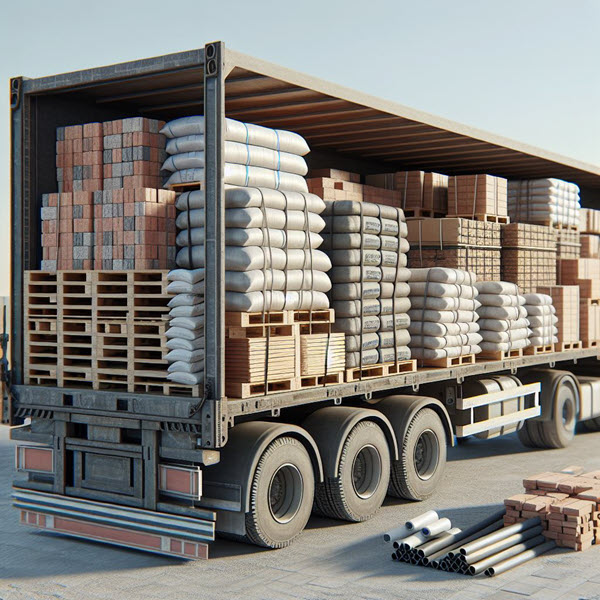
A complete guide to shipping construction materials
Whether you're a contractor, supplier, or DIY enthusiast, understanding the unique challenges of transporting these heavy, often bulky items is essential. Ship your building materials efficiently with Freightquote.
Shipping construction materials